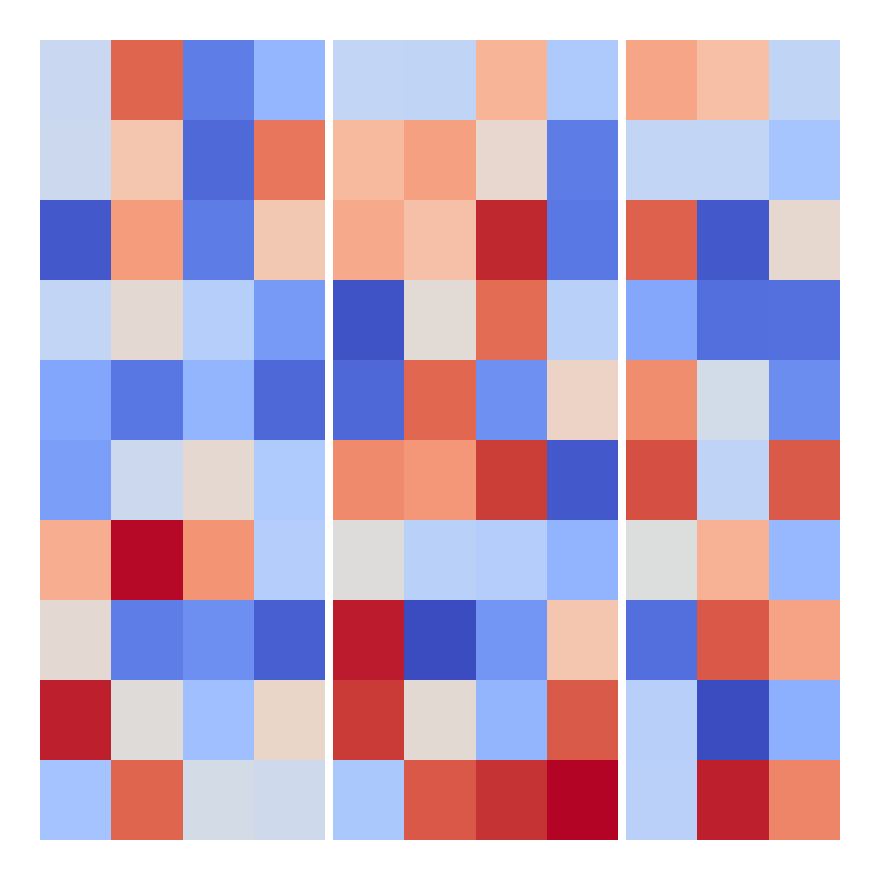
marsilea.base.ClusterBoard#
- class ClusterBoard(cluster_data, width=None, height=None, name=None, margin=0.2, init_main=True)#
Bases:
WhiteBoardA main canvas class that can handle cluster data
- Parameters:
- cluster_datandarray
The cluster data
- widthfloat, optional
The width of the main canvas in inches
- heightfloat, optional
The height of the main canvas in inches
- namestr, optional
The name of the main canvas
- marginfloat, 4-tuple, optional
The margin of the main canvas in inches
- init_mainbool, optional
If True, the main canvas will be initialized
See also
- add_dendrogram(side, method=None, metric=None, linkage=None, meta_linkage=None, add_meta=True, add_base=True, add_divider=True, meta_color=None, linewidth=None, colors=None, divider_style='--', meta_ratio=0.2, show=True, name=None, size=0.5, pad=0.0, get_meta_center=None, rasterized=False)#
Run cluster and add dendrogram
Note
method and metric only works when you add the first row/col dendrogram.
If add_meta=False and add_base=False, the dendrogram axes will not be created.
- Parameters:
- side
- methodstr
See scipy’s
linkage- metricstr
See scipy’s
linkage- linkagendarray
Precomputed linkage matrix. See scipy’s
linkagefor specific format.- meta_linkagendarray
Precomputed chunk-level linkage matrix. See scipy’s
linkagefor specific format.- add_metaNone | bool
By default, add_meta is set to False if the linkage is provided, otherwise True. If the data is split, a meta dendrogram can be drawn for data chunks. The mean value of the data chunk is used to calculate linkage matrix for meta dendrogram.
- add_baseNone | bool
By default, add_meta is set to False if the linkage is provided, otherwise True. Draw the base dendrogram for each data chunk. You can turn this off if the base dendrogram is too crowded.
- add_dividerbool
Draw a divide line that tells the difference between base and meta dendrogram.
- divider_stylestr, default: “–”
The line style of the divide line
- meta_colorcolor
The color of the meta dendrogram
- meta_ratiofloat
The size of meta dendrogram relative to the base dendrogram
- linewidthfloat
The linewidth for every dendrogram and divide line
- colorscolor, array of color
If only one color is specified, it will be applied to every dendrogram. If an array of color is specified, it will be applied to each base dendrogram.
- showbool
If False, the dendrogram will not be drawn and the axes will not be created.
- namestr
The name of the dendrogram axes
- sizefloat
- padfloat
- get_meta_center: callable
A function to calculate the centroid of data. It should accept a 2D numpy array as input and return a 1D numpy array of the same length as the number of columns in the input, representing the centroid. The default will use the mean values.
- rasterizedbool
If True, the dendrogram will be rasterized
Examples
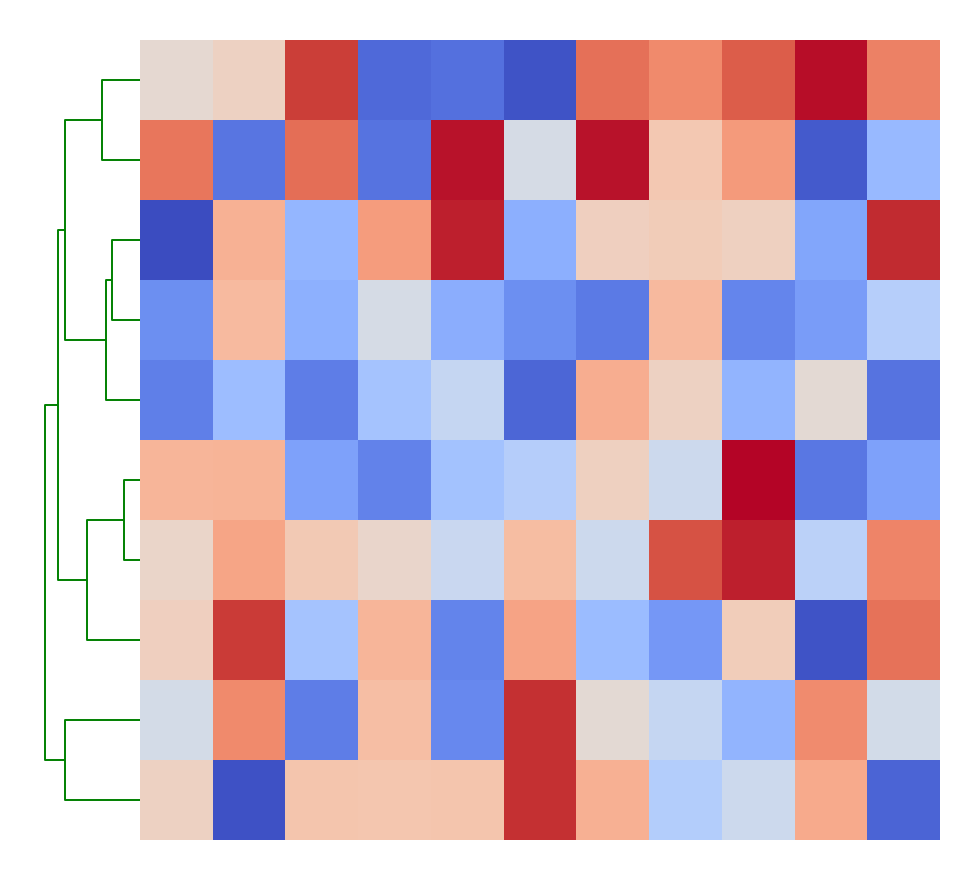
You can change how the linkage matrix is calculated
>>> data = np.random.rand(10, 11)
>>> import marsilea as ma
>>> h = ma.Heatmap(data)
>>> h.add_dendrogram("left", method="ward", colors="green")
>>> h.render()
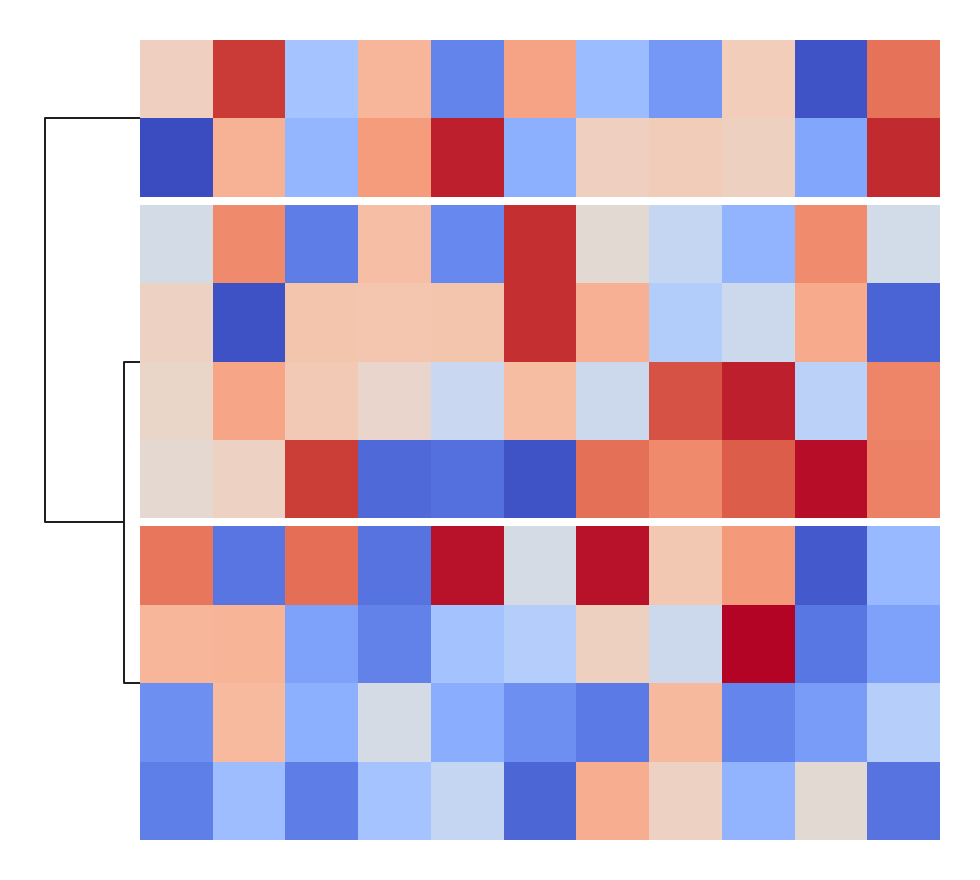
Only show the meta dendrogram to avoid crowded dendrogram
>>> h = ma.Heatmap(data)
>>> h.cut_rows(cut=[4, 8])
>>> h.add_dendrogram("left", add_base=False)
>>> h.render()
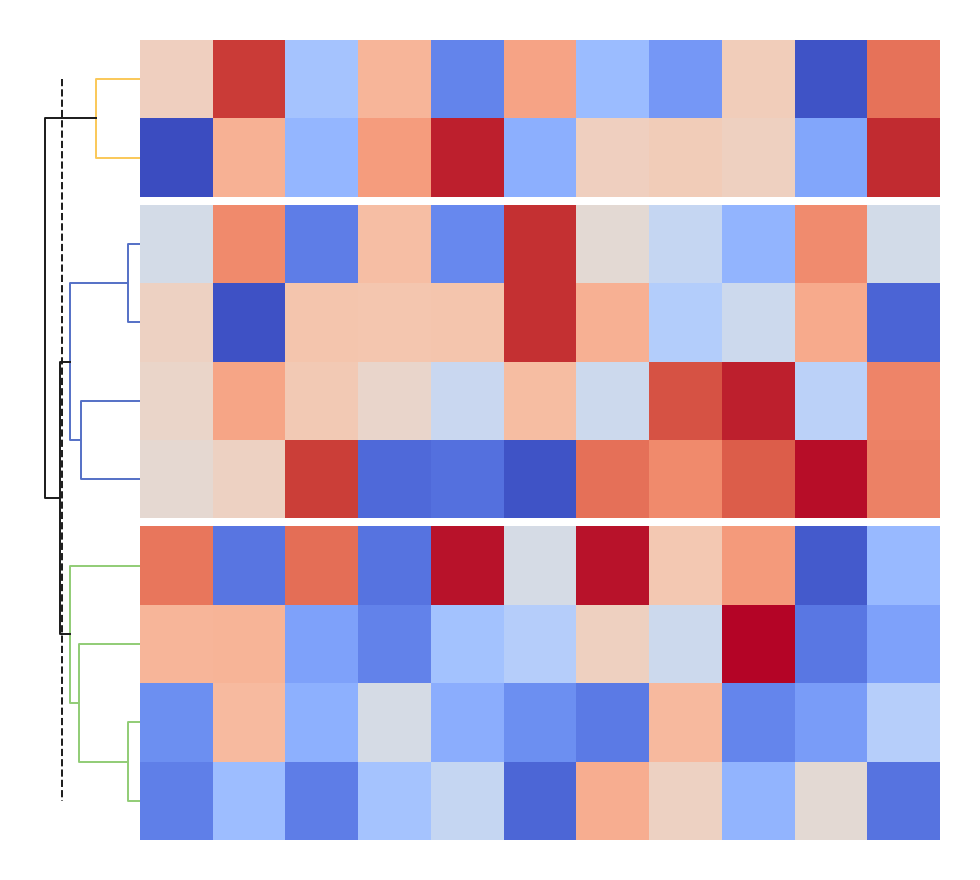
Change color for each base dendrogram
>>> h = ma.Heatmap(data)
>>> h.cut_rows(cut=[4, 8])
>>> h.add_dendrogram("left", colors=["#5470c6", "#91cc75", "#fac858"])
>>> h.render()
- property col_cluster#
If column dendrogram is added
- cut_cols(cut, spacing=0.01)#
Cut the main canvas by columns
- Parameters:
- cutarray-like
The index of your data to specify where to cut the canvas
- spacingfloat, optional
The spacing between each cut, default is 0.01
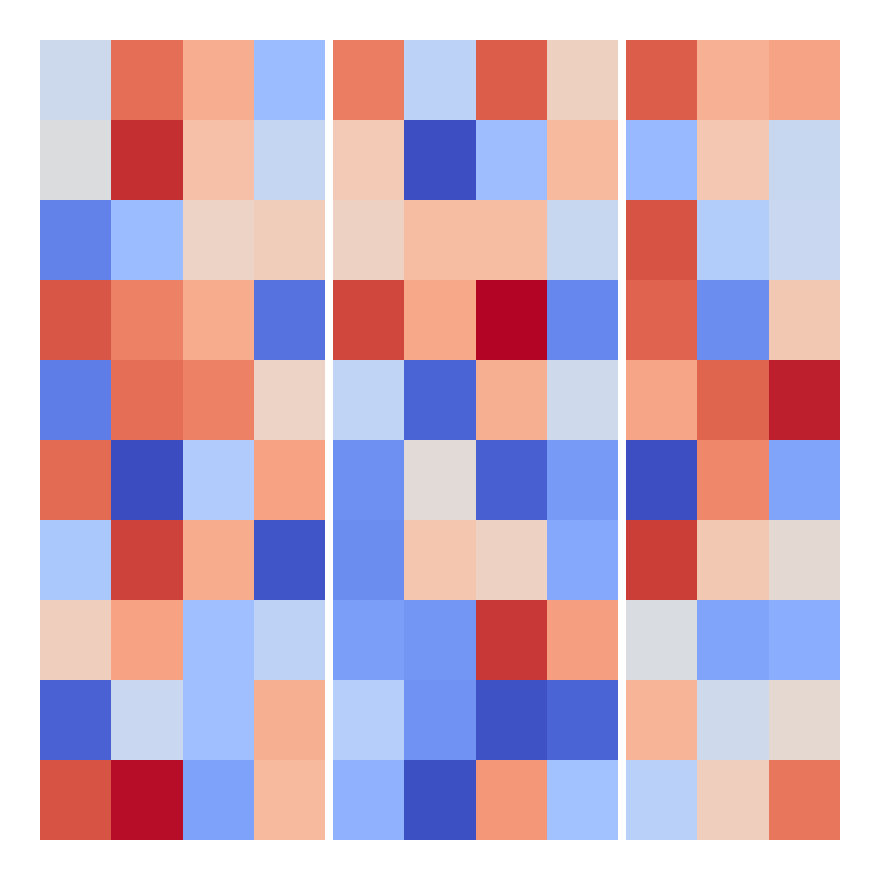
Examples
Cut the canvas by the index
>>> data = np.random.rand(10, 11)
>>> import marsilea as ma
>>> h = ma.Heatmap(data)
>>> h.cut_cols([4, 8])
>>> h.render()
- cut_rows(cut, spacing=0.01)#
Cut the main canvas by rows
- Parameters:
- cutarray-like
The index of your data to specify where to cut the canvas
- spacingfloat, optional
The spacing between each cut, default is 0.01
Examples
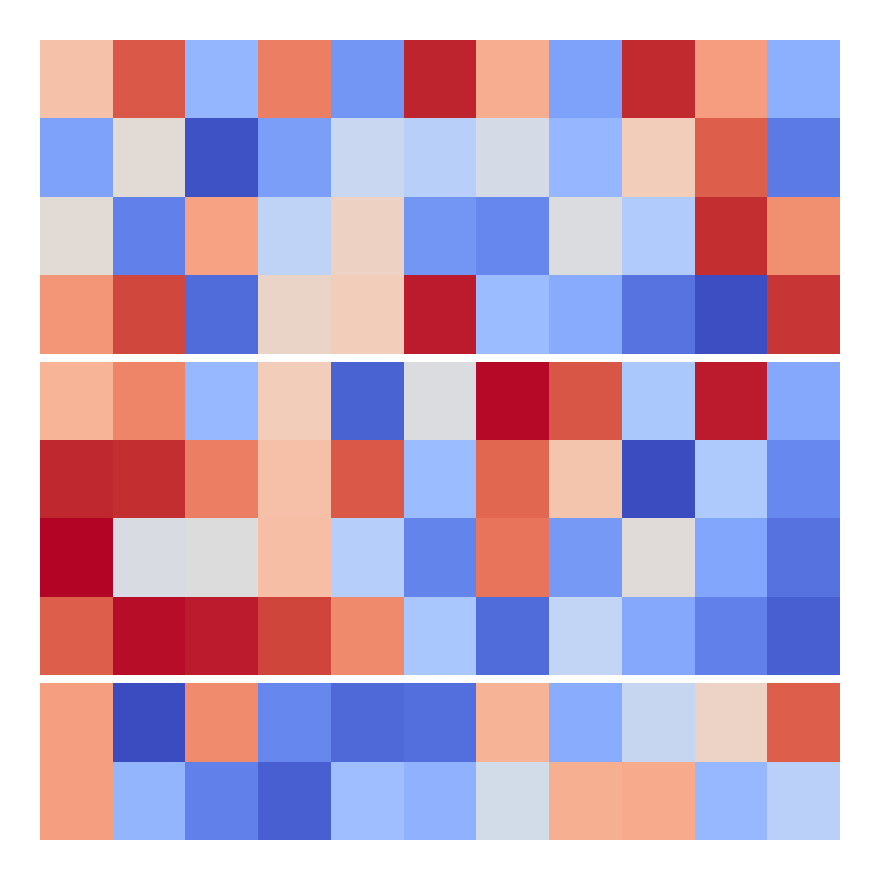
Cut the canvas by the index
>>> data = np.random.rand(10, 11)
>>> import marsilea as ma
>>> h = ma.Heatmap(data)
>>> h.cut_rows([4, 8])
>>> h.render()
- get_col_linkage()#
Return the linkage matrix of column dendrogram
If the canvas is not split, the linkage matrix will be returned; otherwise, a dictionary of linkage matrix will be returned, the key is either index or the name of each chunk.
- get_deform()#
Return the deformation object of the cluster data
- get_row_linkage()#
Return the linkage matrix of row dendrogram
If the canvas is not split, the linkage matrix will be returned; otherwise, a dictionary of linkage matrix will be returned, the key is either index or the name of each chunk.
- group_cols(group, order=None, spacing=0.01)#
Group columns into chunks
- Parameters:
- grouparray-like
The group of each column
- orderarray-like, optional
The order of the unique groups
- spacingfloat, optional
The spacing between each split chunks, default is 0.01
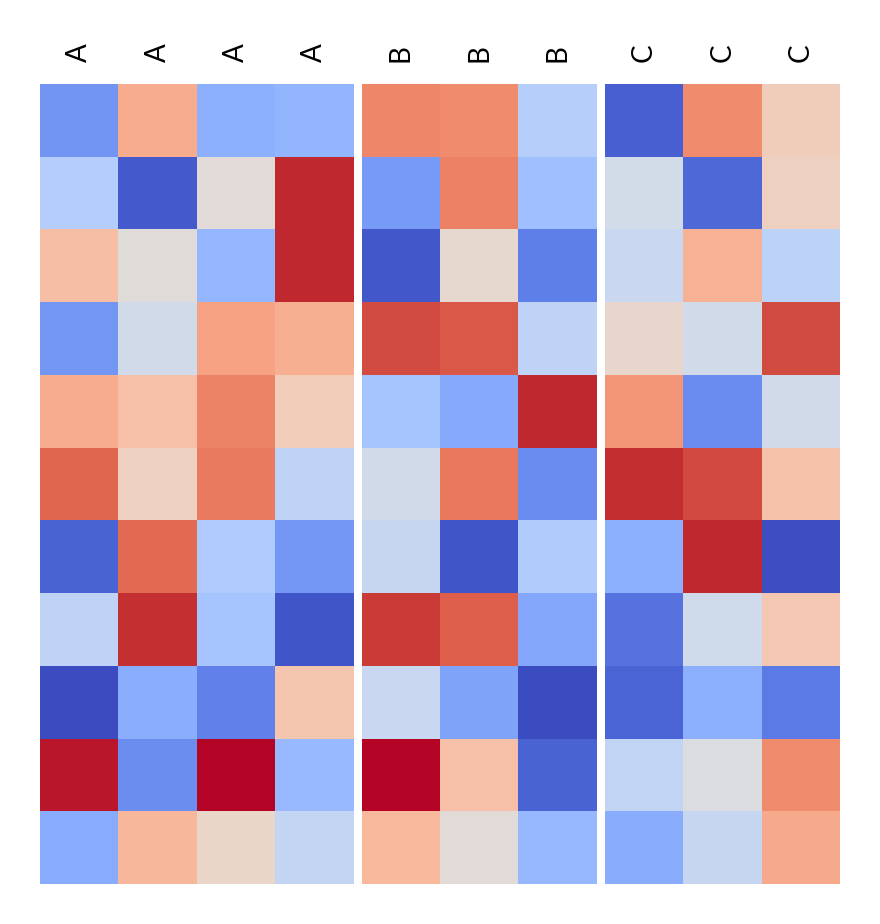
Examples
Group columns by the unique labels
>>> data = np.random.rand(11, 10)
>>> import marsilea as ma
>>> h = ma.Heatmap(data)
>>> labels = ["A", "B", "C", "A", "B", "C", "A", "B", "C", "A"]
>>> h.group_cols(labels, order=["A", "B", "C"])
>>> h.add_top(ma.plotter.Labels(labels), pad=0.1)
>>> h.render()
- group_rows(group, order=None, spacing=0.01)#
Group rows into chunks
- Parameters:
- grouparray-like
The group of each row
- orderarray-like, optional
The order of the unique groups
- spacingfloat, optional
The spacing between each split chunks, default is 0.01
Examples
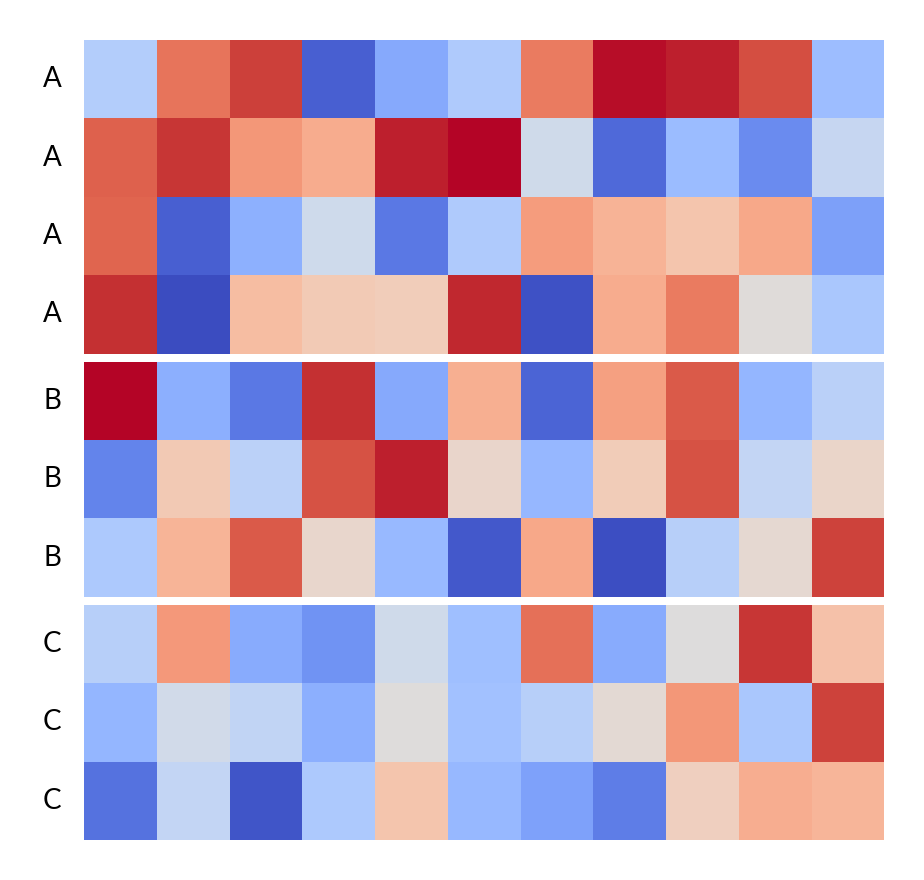
Group rows by the unique labels
>>> data = np.random.rand(10, 11)
>>> import marsilea as ma
>>> h = ma.Heatmap(data)
>>> labels = ["A", "B", "C", "A", "B", "C", "A", "B", "C", "A"]
>>> h.group_rows(labels, order=["A", "B", "C"])
>>> h.add_left(ma.plotter.Labels(labels), pad=0.1)
>>> h.render()
- hsplit(cut=None, labels=None, order=None, spacing=0.01)#
Split the main canvas horizontally
Deprecated since version 0.5.0: Use
cut_rows()orgroup_rows()instead- Parameters:
- cutarray-like, optional
The index of your data to specify where to split the canvas
- labelsarray-like, optional
The labels of your data, must be the same length as the data
- orderarray-like, optional
The order of the unique labels
- spacingfloat, optional
The spacing between each split chunks, default is 0.01
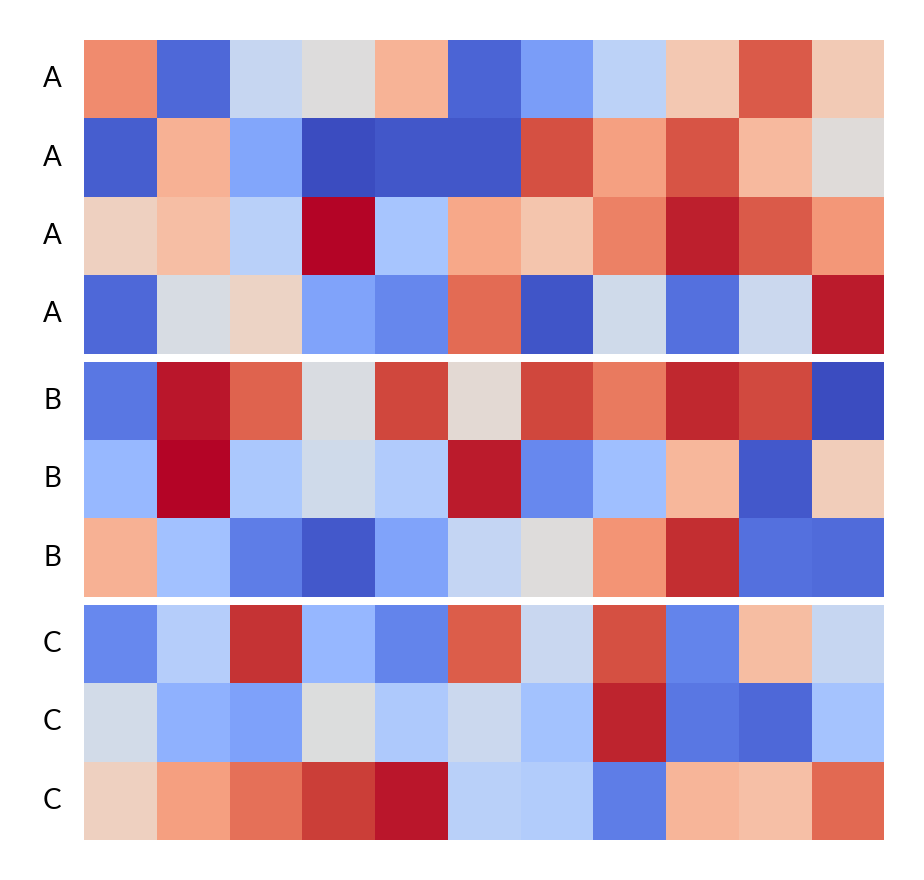
Examples
Split the canvas by the unique labels
>>> data = np.random.rand(10, 11)
>>> import marsilea as ma
>>> h = ma.Heatmap(data)
>>> labels = ["A", "B", "C", "A", "B", "C", "A", "B", "C", "A"]
>>> h.hsplit(labels=labels, order=["A", "B", "C"])
>>> h.add_left(ma.plotter.Labels(labels), pad=.1)
>>> h.render()
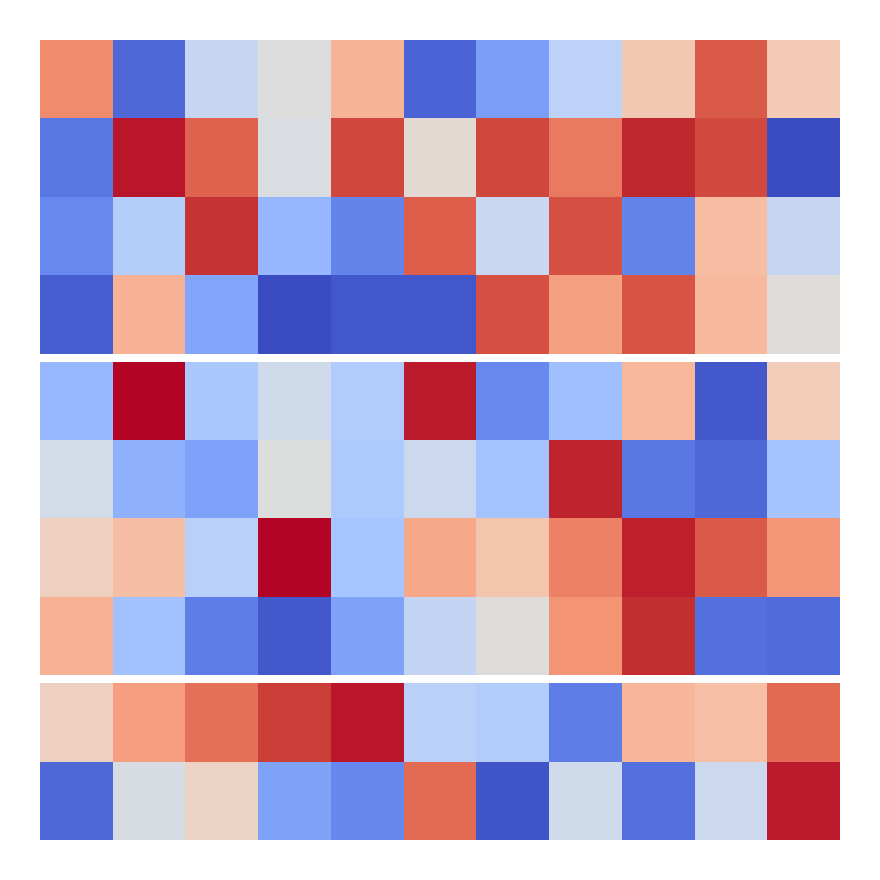
Split the canvas by the index
>>> h = ma.Heatmap(data)
>>> h.hsplit(cut=[4, 8])
>>> h.render()
- property row_cluster#
If row dendrogram is added
- vsplit(cut=None, labels=None, order=None, spacing=0.01)#
Split the main canvas vertically
Deprecated since version 0.5.0: Use
cut_cols()orgroup_cols()instead- Parameters:
- cutarray-like, optional
The index of your data to specify where to split the canvas
- labelsarray-like, optional
The labels of your data, must be the same length as the data
- orderarray-like, optional
The order of the unique labels
- spacingfloat, optional
The spacing between each split chunks, default is 0.01
Examples
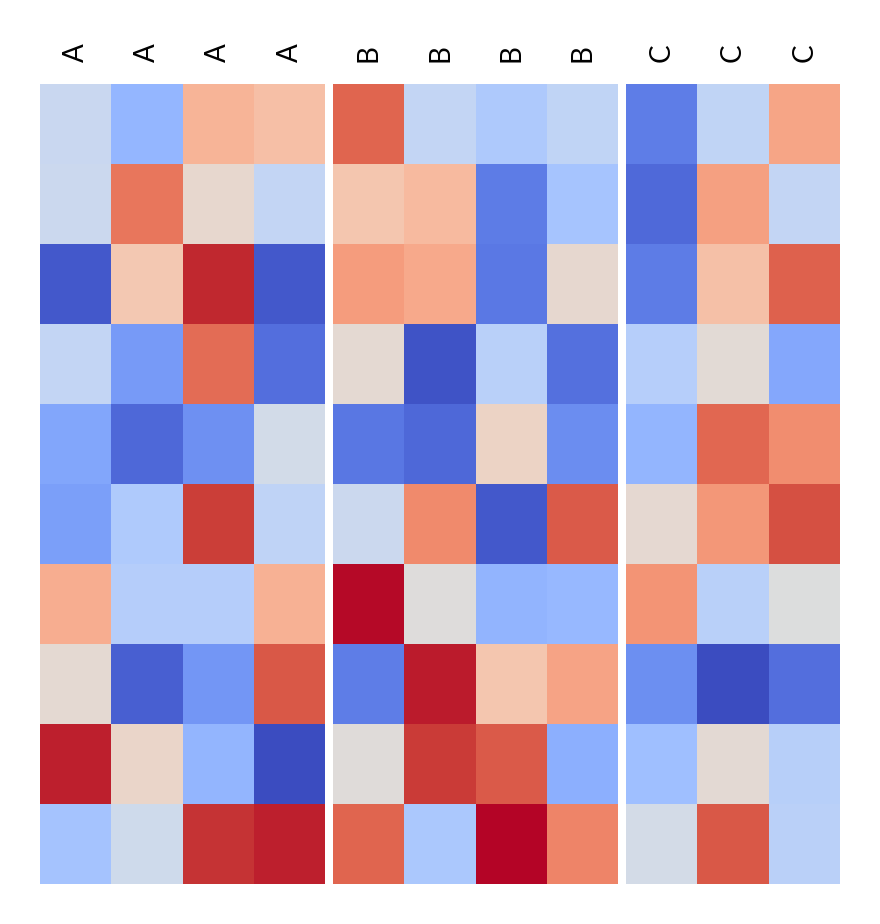
Split the canvas by the unique labels
>>> data = np.random.rand(10, 11)
>>> import marsilea as ma
>>> h = ma.Heatmap(data)
>>> labels = ["A", "B", "C", "A", "B", "C", "A", "B", "C", "A", "B"]
>>> h.vsplit(labels=labels, order=["A", "B", "C"])
>>> h.add_top(ma.plotter.Labels(labels), pad=.1)
>>> h.render()
Split the canvas by the index
>>> h = ma.Heatmap(data)
>>> h.vsplit(cut=[4, 8])
>>> h.render()